Abstract
Plastics play a major role in daily life, with unprecedented levels of usage. as anthropogenically produced polymers should be optimized with regard to biodegradability and biocompatibility, green chemistry strategies offer promising pathways. in this context, the symposium on sustainable polymers in Tübingen presented a comprehensive overview of recent advances in polymer research, addressing synthesis and degradation pathways along with environmentally benign catalysts. These developments benefit not only industrial efficiency but also resource conservation and environmental protection. Beyond these sustainability-driven concepts, innovative approaches to biocompatible biomaterials for medical applications and advanced polymer systems for therapeutic drug delivery were highlighted. This conference report presents current polymer research, including contributions from the medical, pharmacological, and ecological fields. To foster interdisciplinary exchange on sustainable polymers, the Tübingen Symposium was initiated by the interdisciplinary faculty College of Fellows: Center for Interdisciplinary and Intercultural Studies at Eberhard Karls University Tübingen, Baden-Württemberg, on October 9, 2025, from 8:30 a.m. to 5:30 p.m., at the Ernst von Sieglin Lecture Hall.
Key words: polymers, nanomedicine, environmental health, microbiology, chemistry
Introduction
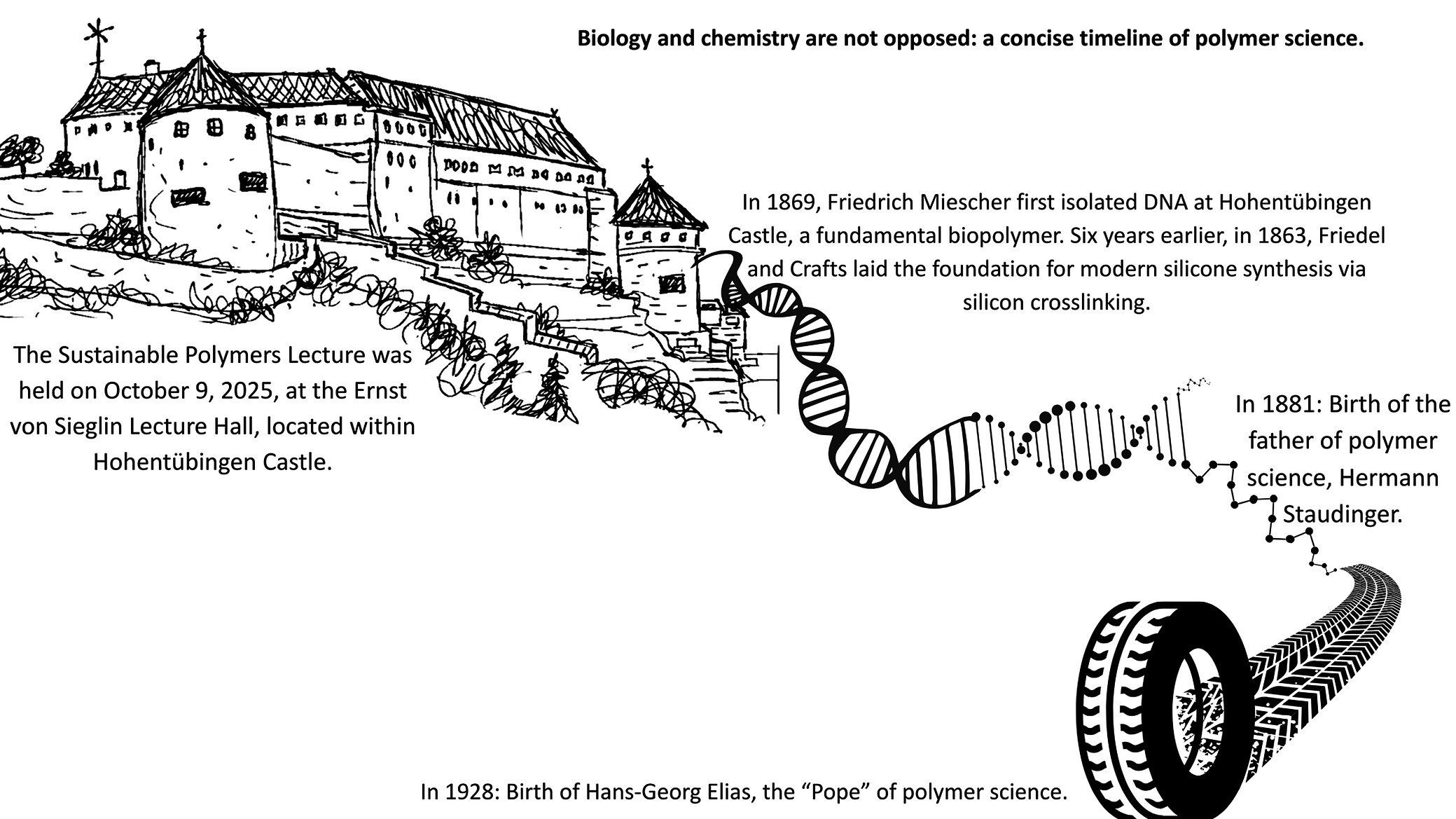
The Anthropocene is defined as a geological epoch shaped by human activity. One of its defining characteristics is the large-scale production and consumption of polymers. With 445 million metric tons of thermoplastics feeding international markets in 2025,1 there appears to be a substantial demand for anthropogenically produced polymers in everyday applications as well as in scientific and medical contexts. Consequently, it is necessary to optimize eco-friendly and cost-efficient polymer synthesis pathways and to identify biodegradable and biocompatible biopolymers.2 A scientific approach addressing sustainable polymers would help address numerous challenges in environmental and human health sciences. Ever since 2011, sustainability lectures have been held annually in Tübingen. the 2025 meeting was dedicated to sustainability projects in chemistry, advancing them through research, teaching, and science communication. the event was held in the Ernst von Sieglin Lecture Hall, located within Hohentübingen Castle. the lecture on polymer sustainability took place in the very building where Friedrich Miescher isolated, in 1869, a fundamental biopolymer of our cells: DNA. With the advancement of plastic synthesis and production methods, a new generation of polymers has emerged. Thorough investigations into the sustainability of polymers reveal a high degree of complexity, which clearly merits deeper understanding. in parallel, analytical investigations have enabled scientists to address fundamental questions associated with these materials and their sustainability. Thus, the symposium provided a forum for addressing ecological questions such as biocompatibility and biodegradability.
The “Sustainable Polymers” symposium aimed to: 1) present concepts for polymer production incorporating CO2 capture; 2) promote the use of less toxic catalysts in polymer synthesis; 3) address polymer degradation strategies to reduce annual plastic waste; 4) outline the role of bacteria as biological tools for polymer synthesis; 5) advance the understanding of bacterial degradation processes of naturally occurring polymers such as caoutchouc, while further elucidating their limitations with respect to anthropogenically produced polymers; and 6) highlight the application of nanosized polymers as drug-coating materials in medical therapies as a novel approach. the program covered polymer synthesis and degradation strategies alongside the use of polymers in drug delivery and medical applications and was presented to an interdisciplinary audience, largely consisting of students and scientists in chemistry. Given that the symposium was open to academics from all disciplines, the aim was to present current problems and solution-oriented content and to promote participation in future events, thereby making it possible to benefit from expertise from across the globe (Figure 1).
The College of Fellows at the University of Tübingen, which supported the organization of this event, is a young initiative first launched in 2022, aiming to provide international research fellows with the opportunity to collaborate across disciplines and explore disciplinary boundaries in an open, pressure-free environment. Open to the entire academic community, the symposium fostered dialogue, knowledge sharing, and networking.
The idea of polymer sustainability was strongly supported by chemists, and the Tübingen Symposium was initially established to foster knowledge exchange among them. Beyond chemical strategies – such as developing bio-based polymers from plant-derived epoxide resins combined with CO2 capture – the symposium integrated other disciplines, providing valuable impetus for future research at the interface of sustainability, biotechnology, and medical applications. Notably, advances in pharmacology and microbiology have also contributed to polymer science, further expanding knowledge relevant to human health.
On October 9, 2025, the Department of Inorganic Chemistry in Tübingen hosted the symposium on sustainable polymers, which was attended by approx. 50 participants – primarily members of the Faculty of Chemistry. Nine invited speakers from 4 countries and institutions shared their expertise in polymer science, providing a holistic overview of current environmental challenges and medical limitations in nanopolymer-based drug delivery systems. Overall, the speakers highlighted emerging ecological crises and potential future economic impacts, emphasizing the urgency of addressing these challenges to prevent further escalation. A distinctive feature of the symposium was the opportunity to examine polymer science from the perspectives of chemistry, medicine, and microbiology. the one-day symposium included short discussion sessions following each lecture. Issues addressed included rising CO2 emissions, plastic waste, reliance on petroleum and rare earth elements, and the prolonged degradation of plastics. Proposed solutions included integrating CO2 into catalytic synthesis, recovering rare earth elements, developing biodegradable thermoplastics with CO2-binding capacity, and employing cultivated bacterial strains as an ecological alternative to conventional polymer production. in addition, applications of nanopolymers for targeted drug delivery were discussed. Participants suggested that future events should maintain a similar balance between polymer research and its advancements, and environmental and health-related topics (Table 1).
CO2 integration and plastic pollution challenges
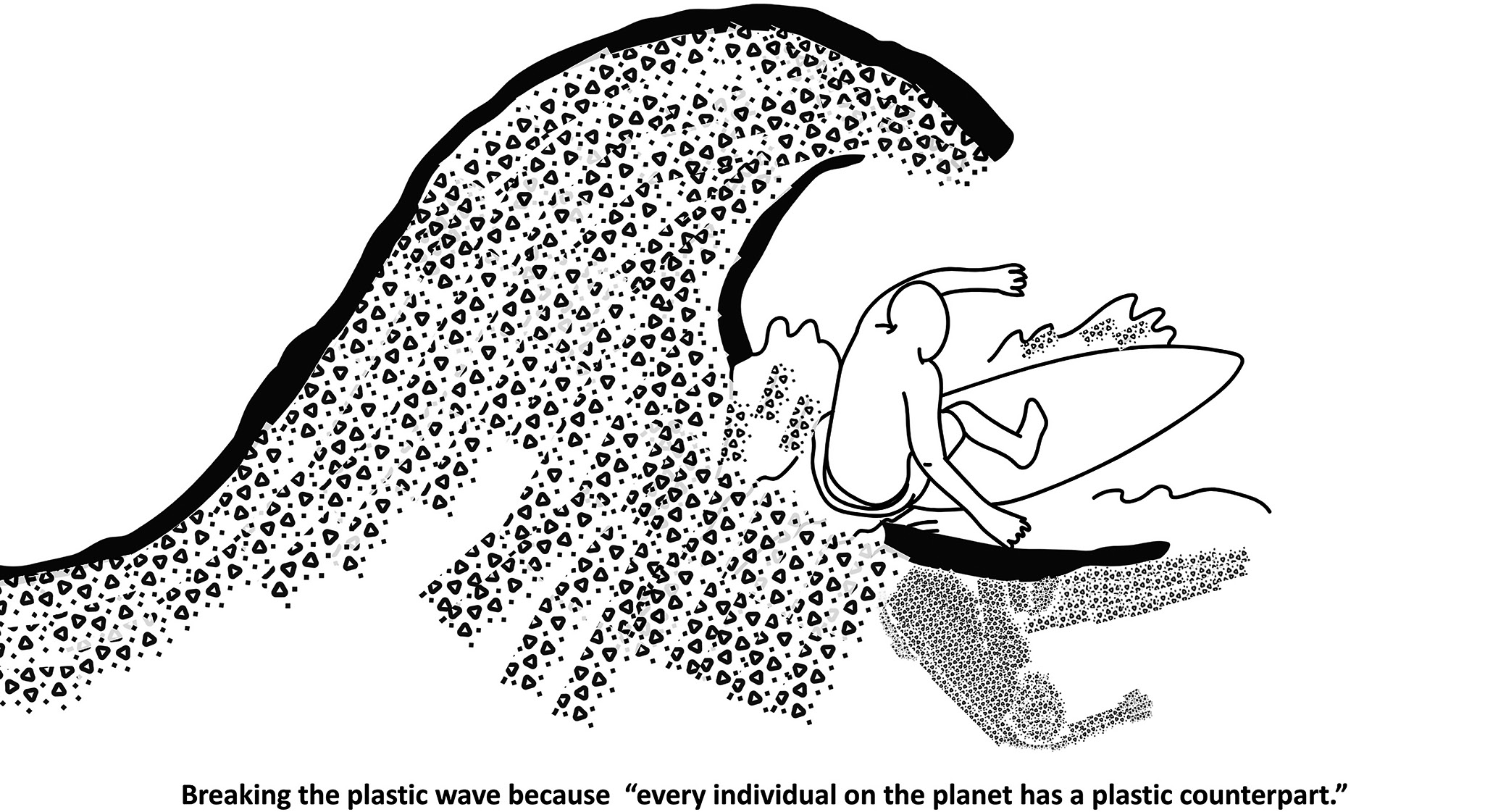
From the outset of the symposium, the urgency of addressing global plastic pollution was underscored – most notably through the observation that every individual on the planet has a plastic counterpart,3 as stated by chemist Professor Dr. Arjan Kleij (Tarragona, Spain) (Figure 2). Kleij introduced CO2 as a potential feedstock to circumvent conventional petroleum-based polymer synthesis: “Bio-based carbon constitutes a versatile feedstock,”4 enabling the transition toward more sustainable material platforms.
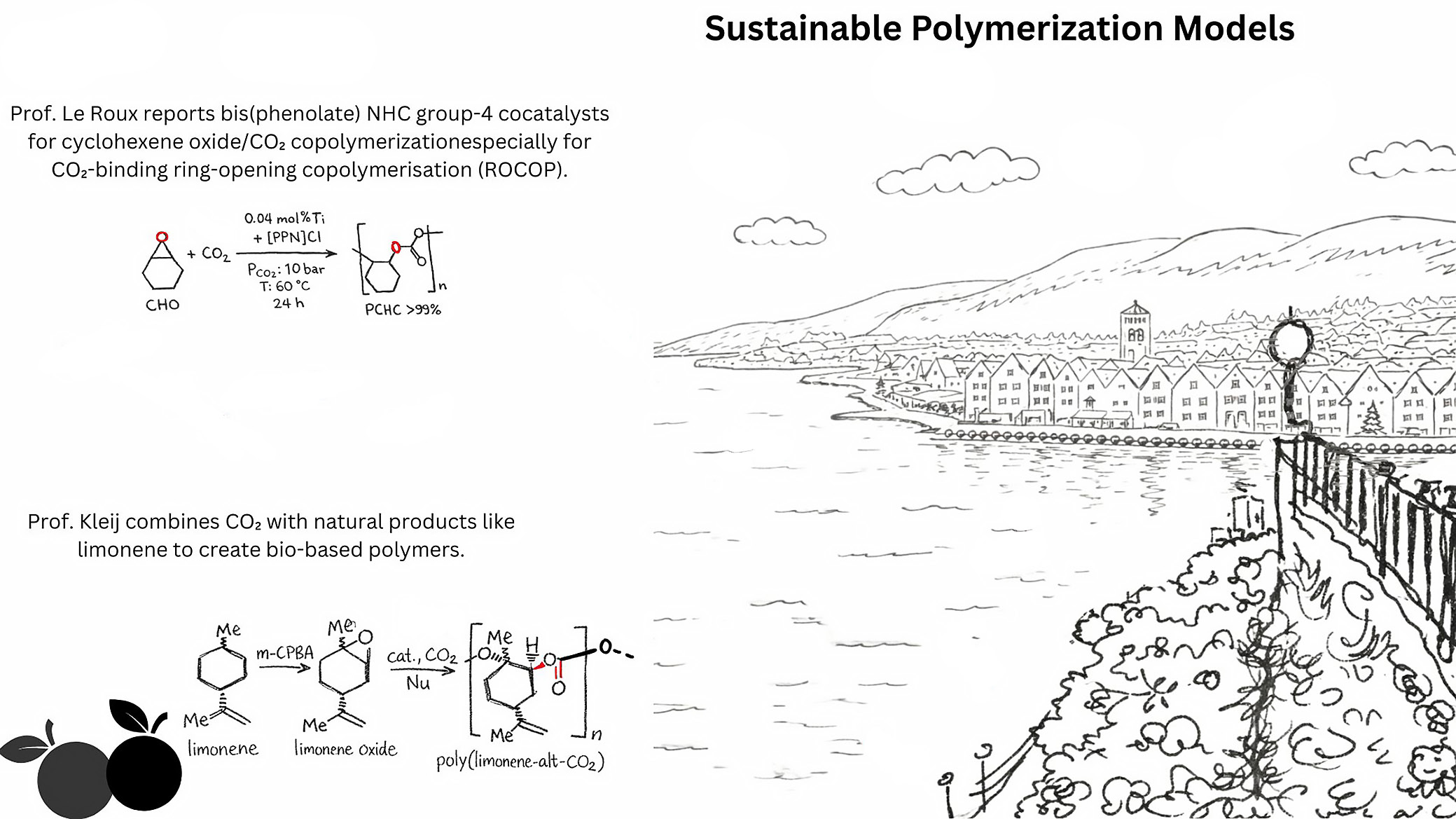
Kleij’s group has developed catalytic methods to incorporate CO2 into substances such as fatty acids, sugars, and terpenes (secondary plant metabolites)5 to create novel bio-based polymeric materials. Key synthetic strategies include ring-opening polymerization techniques (ROP), ring-opening copolymerization (ROCOP) of polylimonene carbonate (PLC) and fatty acids,6 and ring-opening metathesis polymerization (ROMP) of cyclic anhydrides for the synthesis of “renewable and biodegradable polymers such as aliphatic polyesters.”7 These synthetic pathways are grounded in catalytic processes and are designed with sustainability in mind, strategically utilizing atmospheric CO2 as a carbon source. Kleij also addressed the topic of aliphatic polycarbonates synthesized through ROP and ROMP, which are expected to gain considerable relevance in the biomedical field due to their favorable biodegradability and modular structural properties.8
Finally, Kleij highlighted depolymerization and subsequent repolymerization approaches, exemplified by terpene-based polymers (TBD)-mediated degradation and reformation of polycaprolactone (PCL), presenting it as a model system for circular polymer chemistry.9
N-heterocyclic carbenes: A pivotal role for lower energy and toxicity in polymer synthesis
Professor Dr. Erwan Le Roux (Bergen, Norway) also presented novel strategies for CO2-derived polymer synthesis, highlighting the significance of these less energy-intensive processes as a sustainable alternative. in particular, he emphasized their potential to generate new polycarbonate materials while circumventing the use of toxic chemical intermediates such as bisphenol A and phosgene.5
He and his research team have identified N-heterocyclic carbenes (NHCs) as remarkably adaptable molecular scaffolds, particularly in the context of CO2-binding ROCOP. N-heterocyclic carbenes, coordinated with Group 4 transition metals such as titanium (Ti), zirconium (Zr), and hafnium (Hf), function as stable, electron-rich ligands with strong σ-donor capacity. Their incorporation permits precise control over the electronic and steric environment of the catalyst, thereby enhancing reactivity and selectivity and enabling the design of tailored polymer architectures. Ring-opening copolymerization catalyzed by NHC-based Group 4 complexes permits up to 99% alternating CO2 insertion into polycarbonates.6
Furthermore, Le Roux emphasized that the nature of the NHC backbone –specifically whether it is saturated or unsaturated – plays a pivotal role in the formation of catalytically active species. Demonstrating remarkable efficiency in terpolymerization, Hf- and Ti-NHC catalysts facilitate the selective synthesis of diblock terpolymers from a diverse array of cyclic anhydrides (Figure 3).
New horizons in synthesis, upcycling and depolymerization with Team POL (Polymerization) and Team DEPOL (Depolymerization)
Professor Dr. Megan Fieser (Los Angeles, USA) has held the title of New Horizons Fellow at Eberhard Karls University Tübingen since 2024, in recognition of her pioneering research at the interface of polymer synthesis, recycling, and upcycling. Her research program is structured into two teams: Team POL (polymerisation) and Team DEPOL (depolymerisation processes). Accordingly, Team POL represents polymer synthesis activities, whereas Team DEPOL focuses on the development of tailored depolymerisation procedures. the POL group investigates copolymerizations involving diverse epoxides and cyclic anhydrides, providing the opportunity to construct over 400 distinct polyester structures. Notably, these structures can be modified after polymerization and are likely to be both degradable and biocompatible. Although biocompatibility is achieved, the resulting polymers often fall short of reaching sufficiently high molecular weights and exhibit undesirable side reactions. Moreover, a universal “one-size-fits-all” catalyst remains elusive, and the catalysts that are effective tend to be both atom- and time-intensive to produce.7 By leveraging the effects of Lewis acidity and the size of lanthanide salts, the ring-opening copolymerization of diverse epoxides and cyclic anhydrides is significantly enhanced.8 Fieser’s other research team has developed divergent strategies for the depolymerization of polyesters, opening selective degradation pathways tailored to the polymers’ structure and intended recovery applications.9
Lanthanide baking for neodymium recovery
Philipp Wetzel, a researcher in the group of Professor Dr. Reiner Anwander (Tübingen, Germany), addressed problems related to the limited availability of rare-earth materials. Polyisoprene, a key material for rubber wheels, is the product of vulcanized caoutchouc (chemically crosslinked using sulfur). Globally, approx. 14.2 million tons of polyisoprene enter the market each year. Rare-earth metals are required for the polymerization process. On average, around 30 g of neodymium (Nd) are required per ton of polyisoprene produced. Given the scarcity of neodymium and the growing uncertainties in its supply amid increasing market demand, Philipp Wetzel presented a chemical extraction technique via alkali baking as an effective method for recovery.
Calcium-catalyzed synthesis of biodegradable β-butyrolactone
Paul Preisenberger and Nicolas Czimber, researchers in the group of Professor Dr. Reiner Anwander (Tübingen), presented a calcium-based catalyst complex for the synthesis of β-butyrolactone (BBL), a biodegradable compound. Beta-butyrolactone can be polymerized using this catalyst, analogous to those employed in lactide ROP. This method offers improved initiation control by leveraging calcium as an inexpensive and non-toxic metal to effectively conduct the ROP of BBL. It thus presents a promising route for scalable and environmentally compatible biopolymer synthesis.
Bacteria-produced polymer: PHB – a biodegradable, biocompatible CO2 storage
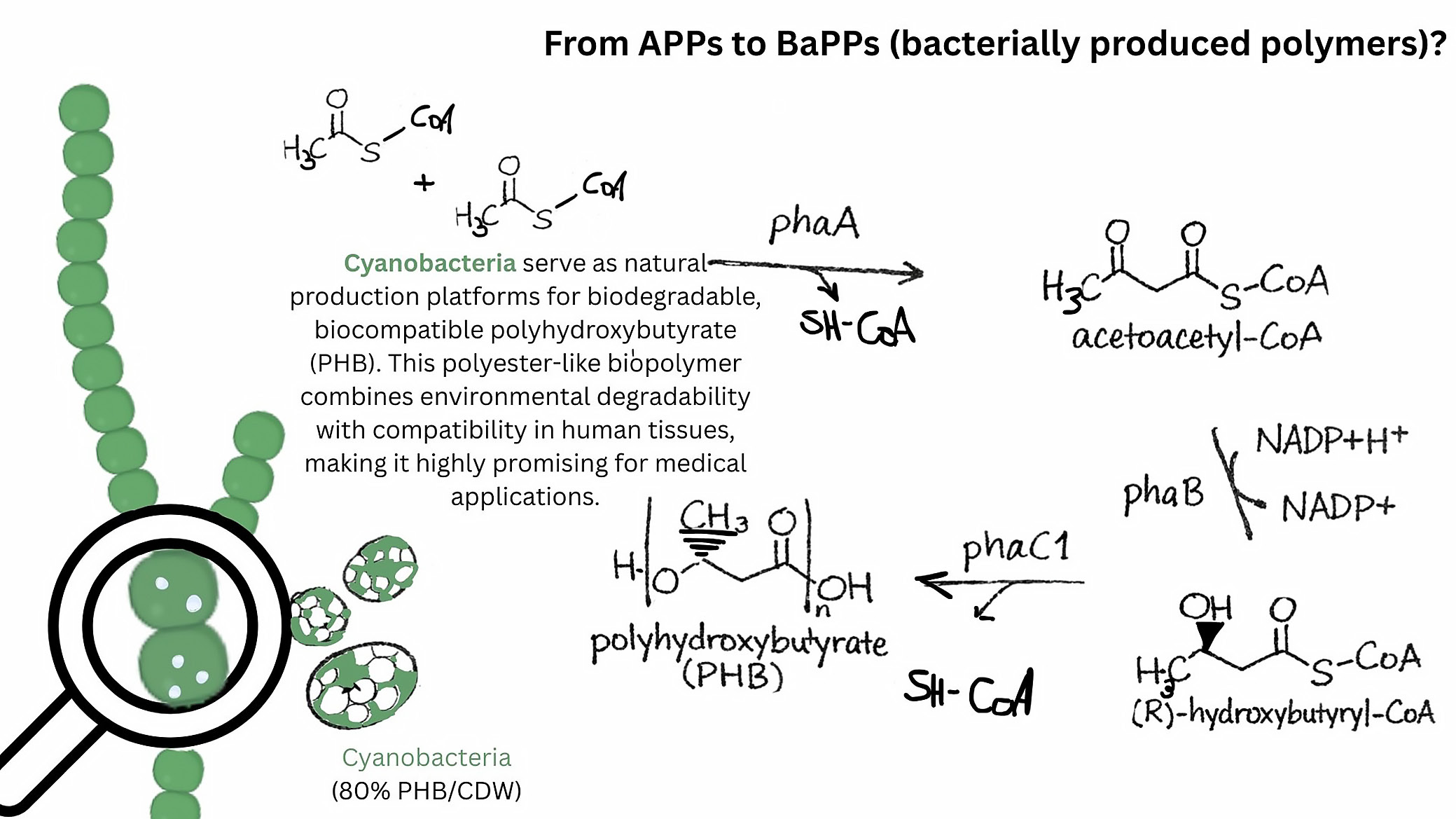
Philipp Fink, who works under the supervision of Professor Dr. Karl Forchhammer (Tübingen), presented his concept of harnessing cyanobacteria as functional natural production platforms for the biosynthesis of biodegradable and biocompatible polyhydroxybutyrate (PHB). It serves as a carbon storage polymer and can accumulate to as much as 90% of the cell dry weight (CDW) under nutrient-limiting conditions.10 in this context, he aimed to overcome the limitations of low PHB yield during autotrophic growth in cyanobacteria10 by integrating continuous PHB biosynthetic machinery11 from Cupriavidus necator into genetically amenable filamentous cyanobacteria of the genus Nostoc sp. PCC7120. Preliminary findings demonstrated that the resulting transformants successfully initiated PHB production.10 Fink underscored the potential industrial applicability of cyanobacteria for PHB production, achieving up to 30% (w/w) PHB relative to CDW, while noting that further optimization and development remain possible (Figure 4).
Bacteria-produced oligomers: plastic degradation
Professor Dr. Dieter Jendrossek (Stuttgart, Germany) provided insights into bacterial polymer degradation. Caoutchouc, poly-(1,4-cis-isoprene), is harvested from Hevea brasiliensis, the rubber tree, and Taraxacum kok-saghyz, the Russian dandelion. During the industrial processing of polyisoprene rubber, effluents are released into both aquatic and terrestrial ecosystems. as a result, polyisoprene-degrading bacteria originally assigned to the genus Xanthomonas and later reclassified as Steroidobacter gummioxidans were identified. Their capacity to degrade polyisoprene is attributed to depolymerizing enzymes, namely rubber oxygenase A (RoxA)12, rubber oxygenase B (RoxB), and latex clearing protein (Lcp).13 the oligo-isoprenoid degradation products vary depending on the enzyme involved.
Rubber oxygenase A generates C15 oligo-isoprenoids and is structurally characterized by a dead-end binding pocket that determines a precise cleavage pattern. This enzyme operates via an exo-type cleavage mechanism and undergoes open–closed conformational transitions. in contrast, RoxB utilizes a substrate-penetrating tunnel, enabling endo-type cleavage of the polyisoprene backbone.14 Consequently, RoxB produces a heterogeneous mixture of oligo-isoprenoids, typically including C20, C25, C30, and higher chain lengths.15
Latex clearing proteins (Lcps), which are structurally distinct from both RoxA and RoxB, also catalyze endo-type cleavage through a mechanism similar to that of RoxB.14 the resulting degradation products resemble those generated by RoxB, comprising oligo-isoprenoids ranging from C20 to C30 and beyond. Collectively, these findings underscore the metabolic capacity of bacteria to degrade natural rubber.
Microbiological capacities and limitations in polymer degradation
In a second presentation, Prof. Jendrossek reported on his long-term, biannual literature searches, consistently using the search terms “PE” and “degradation” to assess the publication landscape. He identified an exponential increase in publications addressing the bacterial degradation of industrial polymers.14 the publishing momentum shows no indication of decline and has expanded to include studies on mealworms and larvae, which, according to some authors, are reported to digest polyvinyl chloride (PVC), polyethylene (PE), and polystyrene (PS) through the action of specialized enzymes.14,16,17 Professor Jendrossek subsequently evaluated these claims using isotopic analysis following the Pee Dee standard from South Carolina. His findings indicated that the calculations reported in the publication by Yang et al.17 were not consistent with the isotopic data.18
Precise polymers: nanoparticles for drug delivery
In her presentation entitled „Poly(solketal acrylate) as a versatile tool for ocular delivery applications”, Yasaman Pourdakheli-Hamedani, under the supervision of Prof. Dr. Friederike Adams (Stuttgart) and Dr. Sven Schnichels (Tübingen), introduced a novel perspective on sustainable polymers, focusing on the application of non-toxic, spherical nanopolymer structures for localized gene therapy. Her studies involve polymer synthesis and characterization, nanoparticle formulation and encapsulation, and evaluation of their application both in vitro and ex vivo. Her ambition is to develop these nanoparticles (NPs) as drug delivery agents administered via local ocular injection. Local ocular injection is employed to circumvent the first-pass effect, minimize systemic toxicity, and facilitate gene therapy for age-related macular degeneration, diabetic retinopathy, retinitis pigmentosa, and Leber congenital amaurosis.19 Furthermore, Pourdakheli-Hamedani outlined several challenges faced by nanoparticle-based ocular drug delivery, including diffusion limitations, nanoparticle aggregation, epithelial barriers, tear clearance, and limited permeability.20 Additionally, nanoparticle-based drug delivery systems must overcome ocular barriers such as tight junctions, efflux pumps, enzymatic degradation, limited permeability of large particles, and immune responses.20 in Pourdakheli-Hamedani’s study, poly(solketal acrylate) (PSA100), a homopolymer, was selected as the amphiphilic carrier polymer that self-assembles into micellar nanostructures. She explained that the well-dispersed spherical NPs, “exhibiting minimal aggregation and a negative surface charge, facilitate efficient diffusion in the vitreous humor.”20 She demonstrated that PSA100 nanoparticles (PSA100-NPs) maintained ideal cell viability across all particle concentrations. in vitro tests with retinal pigment epithelium ARPE-19 cells and primary-derived Müller cells showed time- and concentration-dependent uptake of Nile red-loaded PSA100-NPs. the final ex vivo test on porcine cornea was successfully conducted, demonstrating uptake of Nile red–loaded PSA100-NPs in the outer nuclear layer, inner nuclear layer, and ganglion cell layer.
Conclusions
The Tübingen symposium on sustainable polymers was a unique opportunity for researchers to network and engage in broad interdisciplinary exchange on topics that provide valuable impetus and are exploratory in nature. in particular, the combination of environmental degradability and human biocompatibility offers promising opportunities for applications, especially in the field of medicine.2 One salient observation from the symposium is the need to open the field to researchers from other disciplines. Polymer research is a broad domain in which green chemistry is far from the only discipline playing a major role. Bacteria-based polymer production, as envisioned by microbiologists, holds significant potential for the development of future biodegradable and biocompatible materials. Another point of interest was the limited effectiveness of current biological degradation processes, as claims regarding some worms’ ability to degrade plastics were shown to be unfounded. Moving forward, events in polymer science, such as the Sustainable Polymer Symposium, should be leveraged to promote the exchange of current research while more extensively incorporating contributions from medical, pharmacological, and ecological disciplines in future gatherings.
Use of AI and AI-assisted technologies
Not applicable.